
The next Generation: ABAP RESTful Application Programming Model

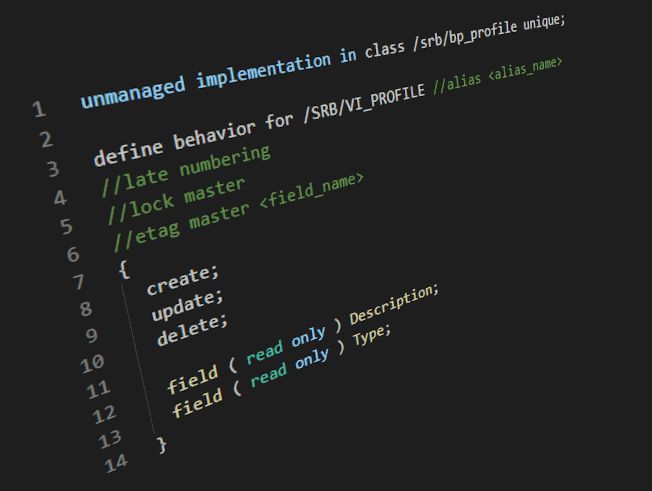
RAP is the latest model from SAP. This opens up another option to implement service providers for the OData protocol.
RAP – ABAP RESTful Application Programming Model – is the latest development model from SAP. This opens up another option to implement service providers for the OData protocol. RAP also defines the architecture for implementing a solution based on SAP HANA and the ABAP Application Server, up to the OData Web API or OData UI Services.
The interface is the solution
Interfaces are not a blank spot on a map for us. Over the years, we have acquired extensive know-how. Both in consuming services and implementing service providers, we have developed various solutions in several projects. Keen readers of our website will remember our Cats solution (based on SAP Netweaver Gateway), where an interface for time tracking was implemented, along with an iOS app and an Outlook add-in as clients.
RAP: a meaningful evolution
With the ABAP RESTful Application Programming Model (RAP), another efficient way to implement a service provider for the OData protocol becomes relevant. ABAP RAP provides the architecture for implementing a solution based on SAP HANA and the ABAP Application Server, up to the OData Web API or OData UI Services.
Using Core Data Services (CDS), individual entities (e.g., a service ticket or a customer) provided via the interface are declared. The relationships between the individual entities can also be defined. Unlike earlier solutions, where the model was programmed using a model provider class, this can now be implemented declaratively. This also allows for checks to be carried out in the development environment during the modelling phase, rather than only at runtime.
Additionally, optimistic concurrency control is supported via ETag, as well as declarative authorisation checks for read operations. Of course, there is the option to integrate custom (including existing) program logic to represent more complex transactions or processes.
The developed services can be published as UI services. By using UI annotations, the OData metadata is enriched with additional information, allowing the Fiori interface to be generated from it (see also Fiori Elements).
RAP replaces standard transactions
Using the ABAP RESTful Application Programming Model, we have now developed many browser-based applications to replace standard transactions. Always in focus: user experience. By reducing to essential components and interactive user guidance, we have created added value for our customers: workflows have been significantly simplified.
Additionally, as an alternative to the SAP Fiori Launchpad, we have developed the SRB Workspaces, which supports the representation of hierarchies, for example. Based on UI5 technology, various interactive tile types and tile sizes are supported.
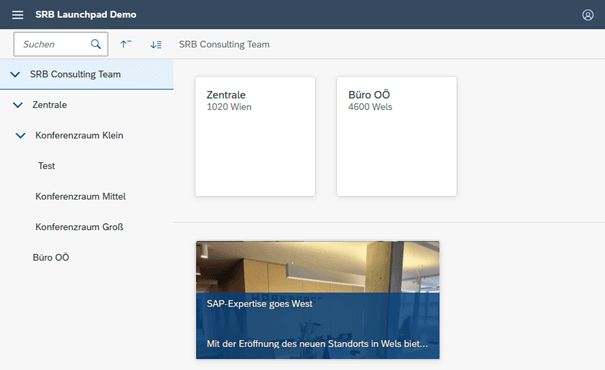
Further details about the SRB Workspaces will be revealed soon.
Conclusion
RAP is a logical evolution of the ABAP Programming Model for SAP Fiori focused on optimising database operations. This now allows us to develop new OData interfaces and associated web applications for our customers even more quickly.


