
SRB Workspaces: SAP Single Entry Point with Practical Extras


As a central access point to the ERP, the SAP Launchpad offers a lot, but its role-based perspective sometimes brings disadvantages. We eliminate these at SRB. The name for it: SRB Workspaces.
Anyone working in SAP ERP cannot avoid the SAP Fiori Launchpad. As a central, clear access point to the relevant functions of the system, this solution has made a name for itself. And rightly so.
The structural approach behind the SAP Launchpad is role-based and non-hierarchical. Everyone gets their own personal SAP view, tailored to their specific area of responsibility through SAP roles. However, this access is not always the most efficient for users and administrators.
Some roles require jumps to functions that are already in a certain context – and that, in turn, depends on the users and their assigned layer or focus, meaning which production line they are currently in. Additionally, data is often made available in a cumbersome manner due to the purely role-based design of the SAP Launchpad and cannot be presented hierarchically.
SRB Workspaces Turn Perspectives Around
This is where SRB Workspaces come into play. They complement and extend the SAP Launchpad and eliminate the disadvantages of the role-based approach. Unlike SAP solutions, they have a hierarchical and object-oriented perspective, thus enabling individual overview data and SAP access points for specific tasks. This way, SRB Workspaces bring the appropriate context and a clear structure to SAP applications for every request. And they are always tailored to the individual working in the system.
Would you like an example? Let's take maintenance. A maintenance process for a specific plant is initiated.
In the SRB Workspaces, users control the process using hierarchical navigation from the plant down to the equipment. In this context, they execute the function to start the maintenance process. Since the function is executed in the chosen context by this specific user, the input fields for the technical object, the processing team (depending on the users), and other standard values are automatically pre-filled.
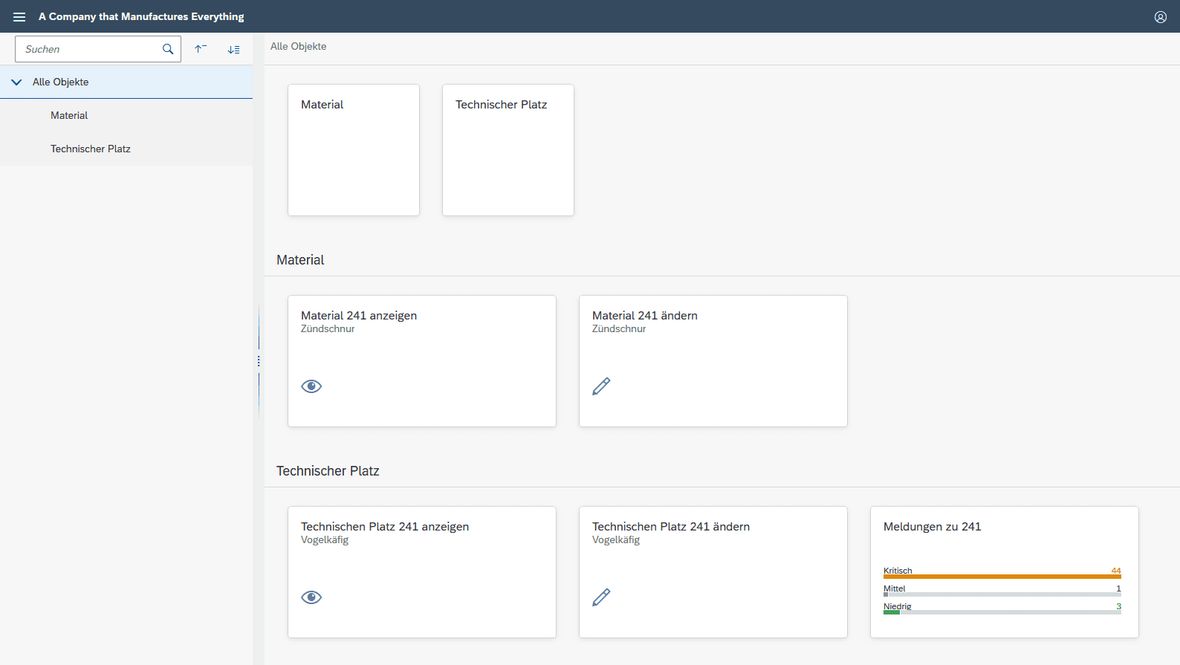
And because one workspace is often not enough, multiple workspaces can certainly be managed on one system, as the following example from the HR area shows.
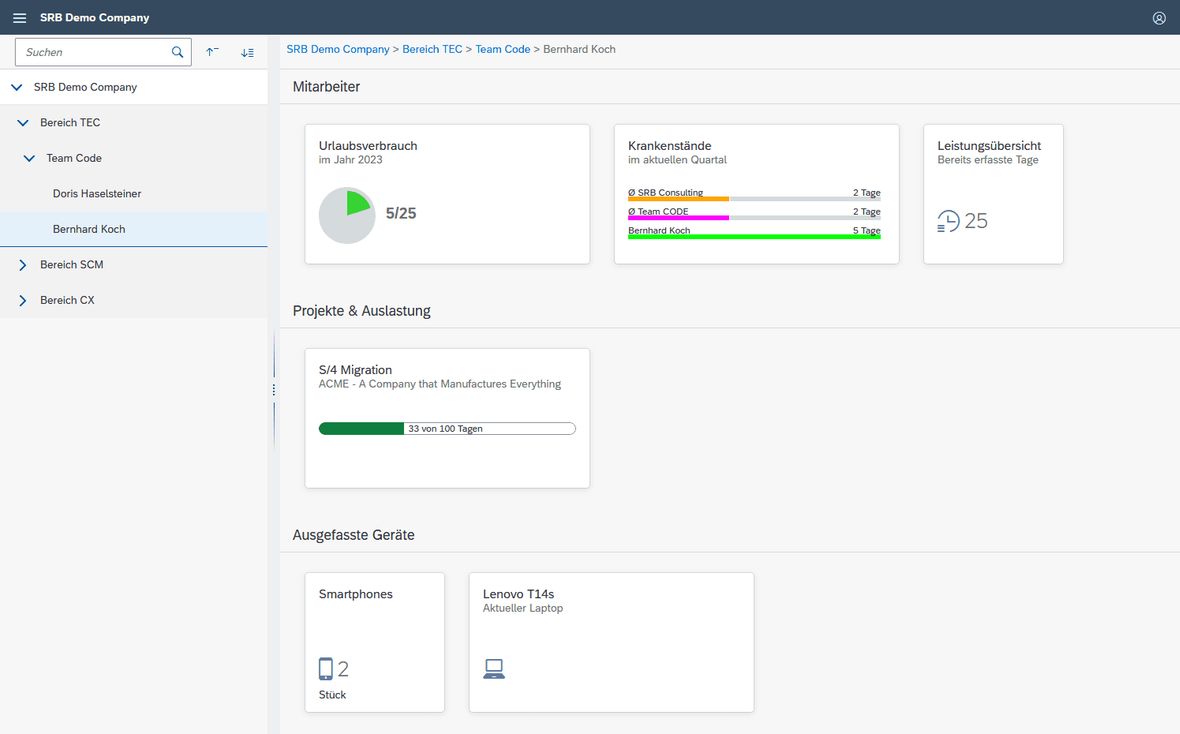
Simple Configuration for a Dynamic Dashboard
The configuration of individual workspaces is carried out via a view cluster using SAPGUI. Simply put, a workspace consists of a hierarchy, various groups, and individual tiles. Different groups can be assigned to each level of a hierarchy, and tiles can be assigned to the groups. The groups place the tiles in a common context.
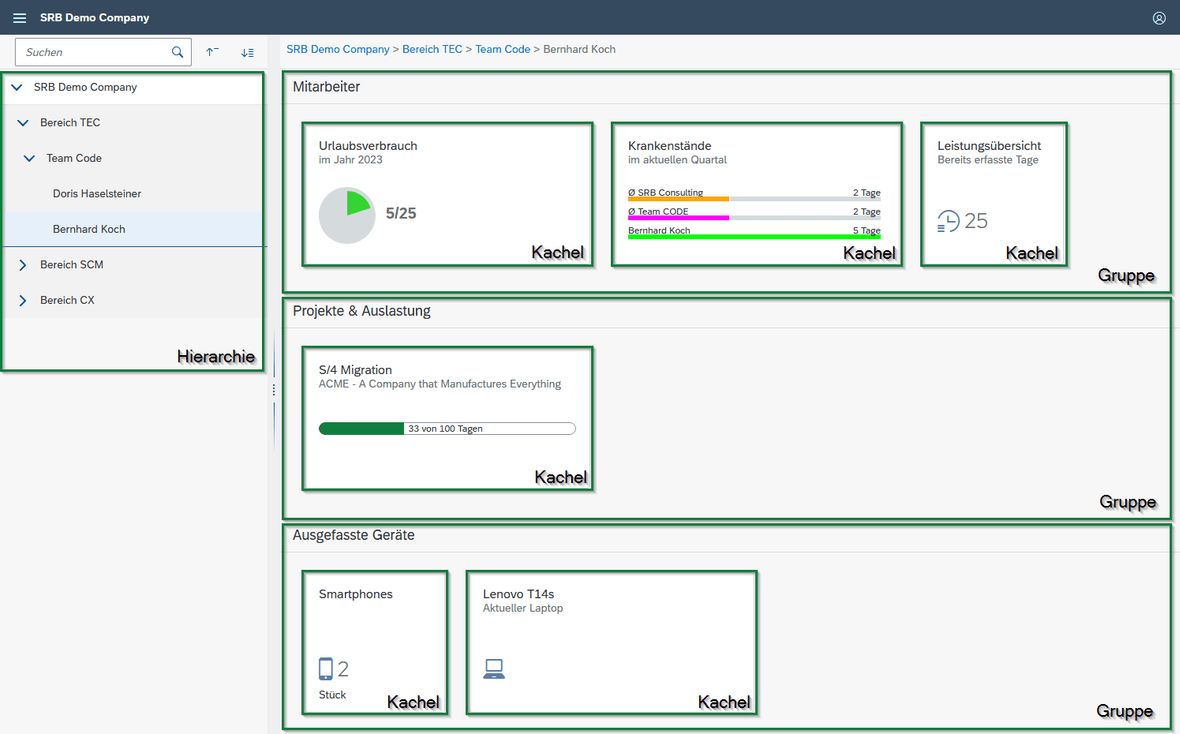
Flexibility and reusability are created by allowing tiles to be assigned to as many groups as desired, and groups to as many hierarchy levels as needed. And this also spans across different workspaces.
Although the customisation of SRB Workspaces may seem static at first glance, various extension options and dynamic content are supported. This allows a workspace to be transformed into an interactive dashboard. Various charts provide the opportunity to visually represent periodically updated data – clear and structured, of course. The data is retrieved from the backend, and knowledge of interface development is not necessary. For each chart, only an ABAP-OO class needs to be implemented in the backend, which determines and provides the relevant data. Example implementations can be viewed in ourGitHub Repository.
Flexibly Expandable and Customisable
In addition to the charts, customisation can be adjusted through Business Add-Ins, orBAdIs. This allows SRB Workspaces to change or hide tiles or hierarchies based on permissions, roles, or user settings. For example, if we stay with the HR scenario shown above, it becomes possible to display details about their employees to a team leader, while individual team members can only view their own data.
Development takes place in the backend in ABAP. This allows access to the entire data set of the system, thus enabling the creation of dynamic workspaces.
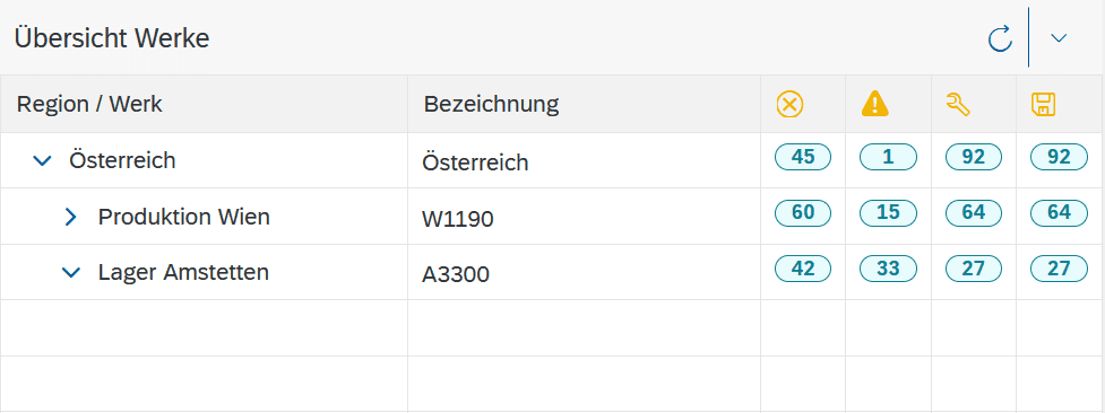
Finally, the frontend can also be customised. This creates the opportunity to enrich the standard navigation tree with additional information. Your SRB Workspaces could look like this:
Want more details? Our webinar provides insights!
You may ask, "Is that really all there is?" I can reassure you. That is far from it. The SRB Workspaces offer several more technical refinements. However, these would exceed the scope of this blog article. If you want to know more, please contact me or my colleagueManfred Scheinerdirectly or sign up for ourSRB Workspaces Webinar on 24 March at 10:00 AM, as part of ourSRB Webinar Week. We are already looking forward to seeing you and your questions.


