
SAPUI5, Tesseract & Co.: This is how meter reading works today

Thinking digitally about processes – that’s what we do at SRB. And we 'craft' solutions accordingly. Paper and pencil for meter reading are a thing of the past. With a small but fine solution, we show how it can be easier, faster, and above all, error-free.
“Everything should be made as simple as possible. But not simpler.”
This quote attributed to Albert Einstein is a constant motivation for me. A motivation to question existing processes, rethink them, and simplify.
Life provides many ideas for this. The latest was even delivered directly to my front door. A few weeks ago, I received unexpected but not unannounced visitors from my heat supplier. The meter was to be read. The service employee came, checked, and wrote. All done manually with paper and pencil on a form.
The creative motor started within me. A personal brainstorm began, and an idea took shape. Keywords like smartphone, photo, text recognition, visit planning, email with appointment, time optimisation, UI5, OData buzzed in my head. Just like the good Mr Einstein and his thought of '…as simple as possible…'.
How the idea becomes a digital process
The idea wouldn’t leave me alone. Quickly, a process manifested in my mind aimed at modernising and simplifying the reading process.
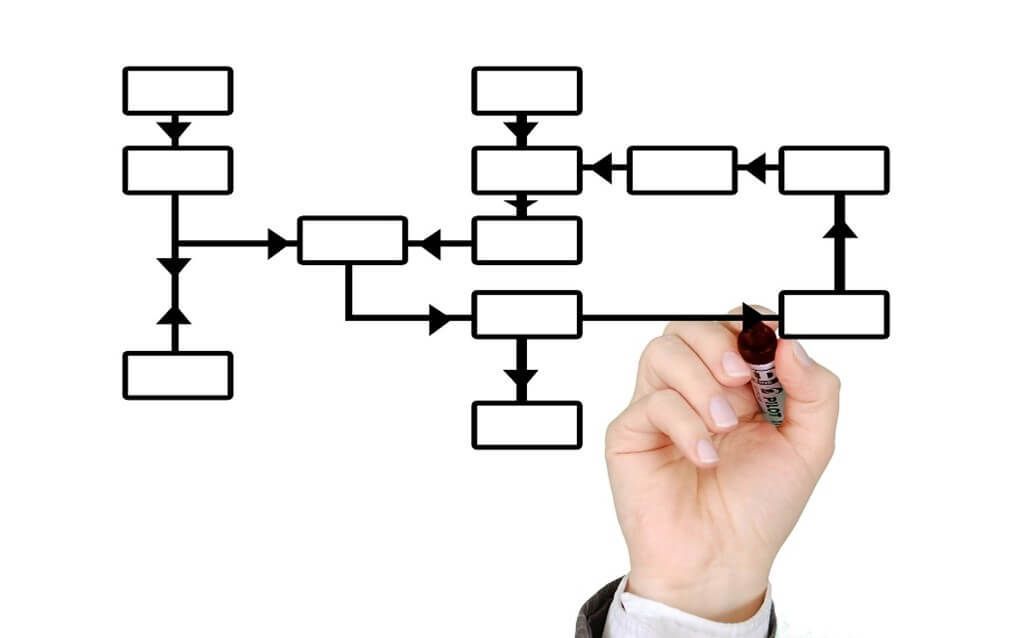
The first step in the process involves periodic, automated visit planning based on experiences, regional conditions, and customer wishes. Some might think of the ubiquitous term AI here. I would place this in the drawer labelled 'OK, but not simpler'. Or perhaps in the one marked 'unnecessarily complicated'. The goal of visit planning is to schedule the employees responsible for reading accordingly and to inform customers about the appointments automatically by sending a message via email, SMS, or other channels.
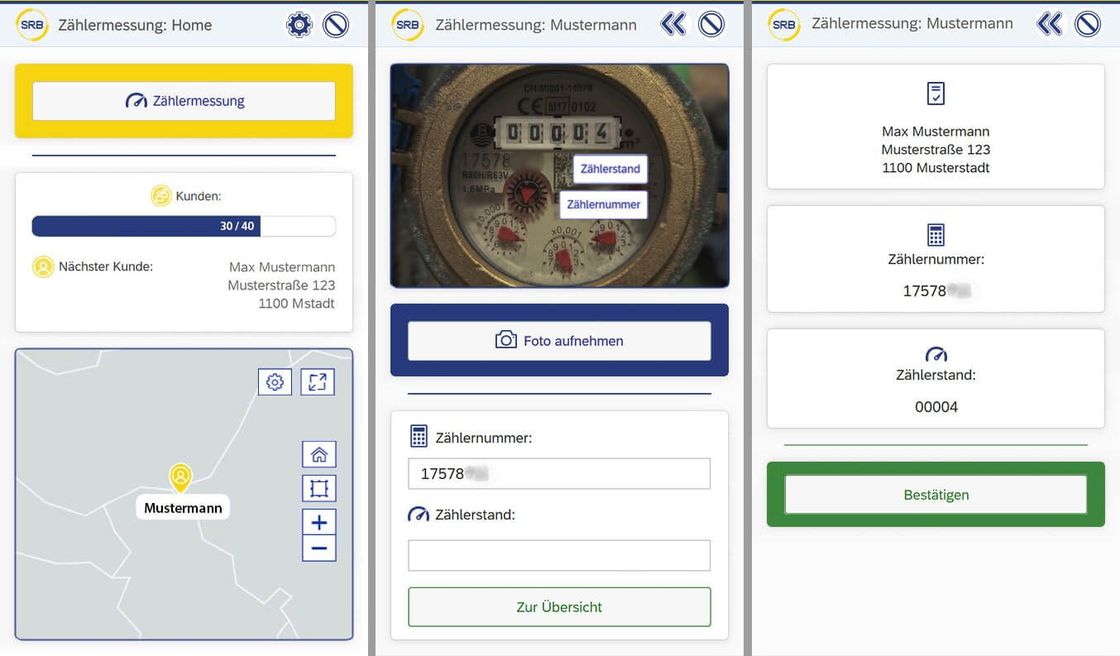
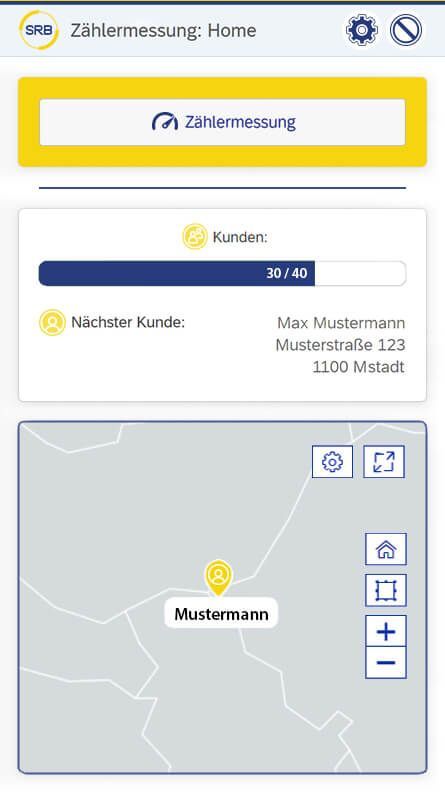
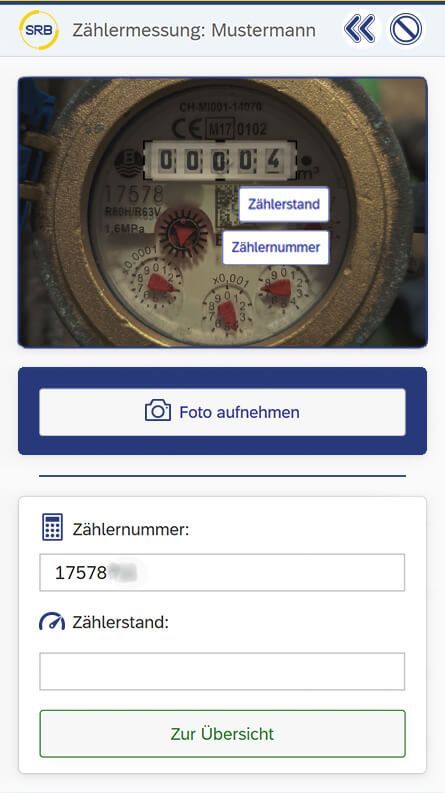
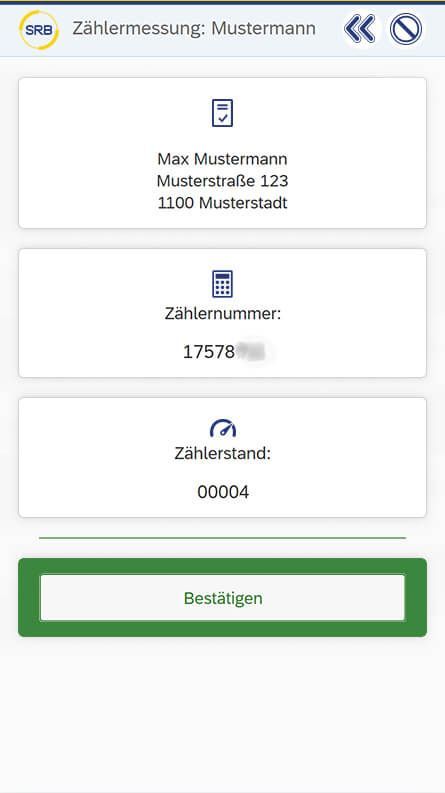
The next step, and the highlight of the entire process, is the actual customer visit and the associated reading process. The idea behind it: An SAPUI5 app on the employee's mobile phone directs them straight to the customer portfolio. Reading is done via a photo, and text recognition software automatically captures the meter number and reading.
The transmission of data is also automated. First, the meter number is matched with the backend via the OData interface to ensure that the data is assigned to the correct customer. If everything matches, the recorded measurement value and the photo are sent to the backend and stored. One click, and the manual tasks are also completed at this point.
And by the way: The billing process is fully automated afterwards. This is, as baumax testimonial and advertising icon SelfMan alias Andreas Steppan would say, 'another story'.
On the way to the PoC with SAP and Open Source
With the idea refined and the process set up, I got to work (together with my colleagues, of course 😉). Off we went towards the proof of concept. Here, I used the latest web technologies available on the market. Just as is customary at SRB and all our solutions.
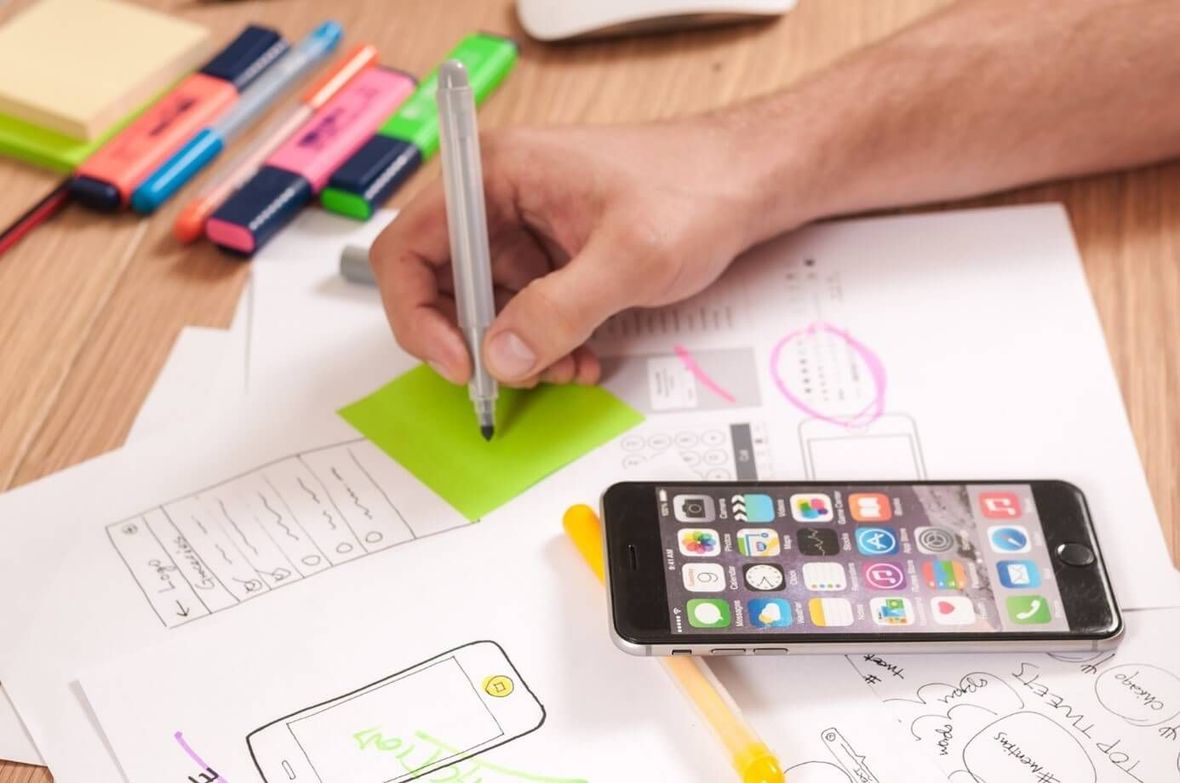
At the heart of the PoC was SAPUI5. The HTML5 framework is SAP's latest passion when it comes to user interface technologies. We have been relying on this technology for years, especially when it comes to interaction with users in a modern operational environment. The special advantage here: Together with SAPUI5 and other (external) libraries, clear and operating system-independent business applications can be developed that also scale across different device classes.
The open-source community drives the development of such libraries. Generally, the open-source area is about a constant 'give and take' and the gathering of knowledge and interests in specific areas. This often leads to very powerful projects.
To give you a sense of the size of the open-source community, here is an excerpt from a list of the most well-known enterprises in the 'scene':
| Rang | Projekt | Leading Company | Marktwert (USD) |
|---|---|---|---|
| 1 | Linux | Red Hat | 16 Milliarden |
| 2 | Git | GitHub | 2 Milliarden |
| 3 | MySQL | Oracle | 1,87 Milliarden |
| 4 | Node.js | NodeSource | ? |
| 5 | Docker | Docker | 1 Milliarde |
| 6 | Hadoop | Cloudera | 3 Milliarden |
| 7 | Elasticsearch | Elastic | 700 Millionen |
| 8 | Spark | Databricks | 513 Millionen |
| 9 | MongoDB | MongoDB | 1,57 Milliarden |
| 10 | Selenium | Sauce Labs | 470 Millionen |
Source: techchrunch.com 2017
Open Source also in in-image text recognition
Even in analysing the photo taken in our app, we rely on an open-source project, namely Tesseract.
Tesseract was originally developed by Hewlett Packard between 1984 and 1995. The development was also supported by Google. The goal was to create a tool to recognise text in images.
Google was interested in converting thousands of books into digitally usable eBooks. The programme supports many languages, including exotic ones like Amharic (a Semitic language spoken as a mother tongue by the Amhara in northern Central Ethiopia), to name just one example. You can find a list of currently supported languageshere at this linkfor yourself.
Tesseract attempts to recognise character patterns based on neural networks. It requires previously trained models to function. Google still drives the training of these models today. Theoretically, custom models could also be trained to cover a specific case that is not yet compatible with the existing models.
Tesseract.js is the porting of the original Tesseract OCR, which was originally developed (and is still being developed) as a command-line programme into the environment of the modern web. A detailed explanation of how Tesseract works technically (as well as scientifically) would definitely exceed the scope of this blog article. However, for our use in the PoC, Tesseract is perfect. If you want to see it in action yourself: A short demo of Tesseract.js can befound here.This is how meter reading works today
The proof of concept certainly proves us right. The combination of the latest technologies with our SRB know-how has resulted in a small, lean application. Clearly structured, easy to use, and highly automated. A small step for us, a giant leap for the energy industry?
If you are interested in learning more about this project or have specific processes you wish to simplify and digitise, just let us know at SRB or
contact me directly.Who knows where we might end up together. Let us find a new way together and rethink processes, because – as I quoted at the beginning, I also quote Einstein here at the end:“Problems cannot be solved with the same mindset that created them.”
„Probleme kann man niemals mit derselben Denkweise lösen, durch die sie entstanden sind."


