
Warehouse Management in S/4HANA

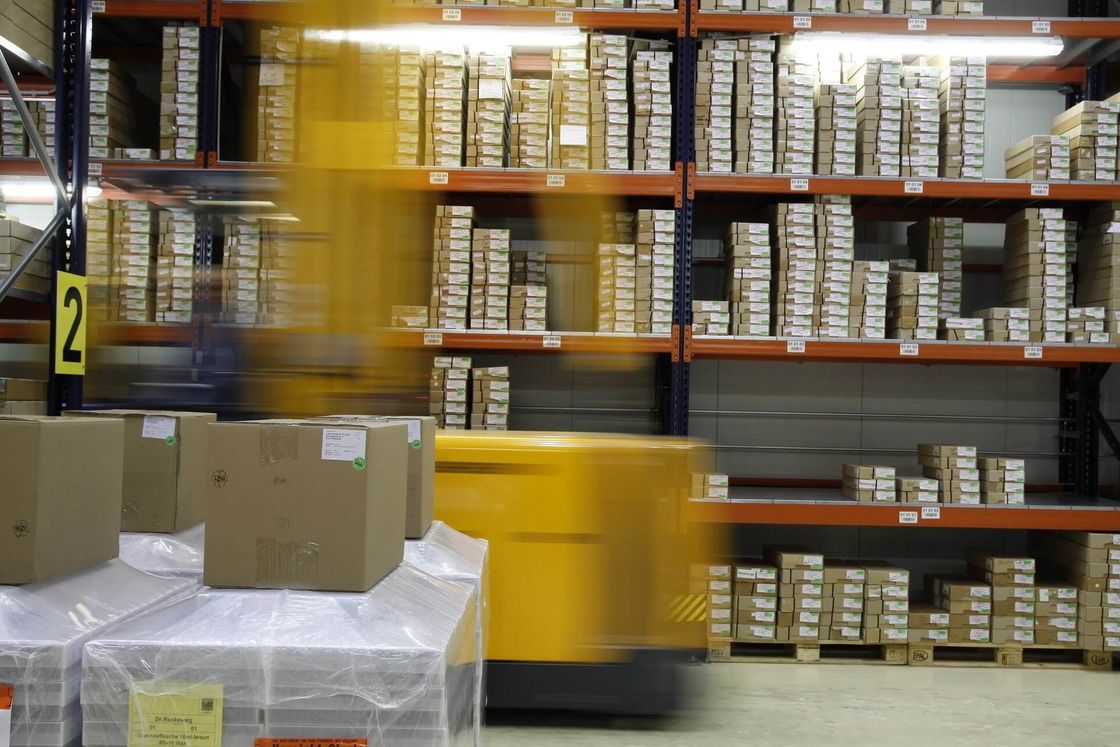
Warehouse management for customers planning a new implementation or wishing to migrate to S/4HANA.
Warehouse management in SAP S/4HANA is diverse. When it works, it works. But until then, there is often the agony of choice. What is best for me, the best solution for my warehouse needs when planning a new implementation or migrating to S/4HANA? A small guide to the right decision.
When searching for solutions for warehouse management in SAP S/4HANA, you will sooner or later encounter the following terms:
- Basic Extended Warehouse Management (Basic EWM)
- Advanced Extended Warehouse Management (Advanced EWM)
- Warehouse Management (WM)
- Stock Room Management
But what lies behind these terms? What do these 'things' mean concretely? And what should be considered when thinking about a new implementation of warehouse management with SAP or a migration to S/4HANA in one's own company?
To ultimately find the right answers for oneself and one's warehouse decisions, it is sensible to first familiarise oneself with the terms.
SAP Extended Warehouse Management (EWM)
EWM was originally a separate module within the SAP Supply Chain Management (SCM) suite and ran on its own machine, connected via an interface to an SAP R/3 system or another ERP. With the transition to S/4HANA, EWM was integrated into the ERP with all its functions. What has not changed: The module still communicates with the other ERP modules via an internal interface. This means, for example, that the material master must be maintained in a separate transaction and deliveries are required for all goods receipts and issues.
While technically all functions are also included in S/4HANA, EWM is divided into Basic EWM and Advanced EWM in terms of licensing. While Basic EWM is included in the SAP Business Suite license, Advanced EWM must be licensed separately. Basic EWM includes all basic warehouse functions, while Advanced EWM additionally includes the following extra functions:
- Cross Docking
- Yard Management
- Labor Management
- Warehouse Automation (MFS)
- Slotting
- Value Added Services/Kitting
Warehouse Management & Stock Room Management
While EWM is the strategic product for warehouse management in S/4HANA, it was originally planned to phase out Warehouse Management (WM) by the end of 2025 (see Compatibility Mode Matrix in notes2269324and2270211). Presumably due to the intervention of several customers, SAP has since revised this decision: WM will still be phased out, but will be replaced by the Stock Room Management module. This includes the same functions as its predecessor, except for:
- Task & Resource Management (WM-TRM)
- Warehouse Control Unit Interface (WM-LSR)
- Value Added Service (WM-VAS)
- Yard Management (WM-YM)
- Cross-Docking (WM-CD)
- Wave Management (WM-TFM-CP)
- decentralised WM (WM-DWM)
These are mostly the functions that would need to be licensed separately in EWM. For basic warehouse management in S/4HANA, this means choosing between WM and EWM. However, it should be noted that SAP clearly communicates that there will be no new developments for WM or Stock Room Management, and EWM is the strategic product. Stock Room Management is therefore intended for existing customers with WM, allowing them to migrate to S/4HANA more easily and continue using their existing WM solutions beyond 2025.
Additionally, it must be mentioned that while WM can still be used, this does not apply to other closely integrated modules. The transport component LE-TRA is particularly noteworthy, which will still be phased out in 2025 and replaced by the Basic Shipping solution in SAP S/4HANA.
Warehouse Management with SAP – what we recommend at SRB
If you are considering a migration to S/4HANA or a new implementation in warehouse management, we at SRB recommend the following approaches in light of the developments outlined above. Important: Your warehouse size and your experience with warehouse management technologies.
Migration with existing WM in use
Migrating to SAP S/4HANA and transitioning from WM to EWM in one step offers no synergy effects. Therefore, we recommend initially continuing to use WM in S/4HANA to reduce complexity from the already very elaborate migration project. A potential transition to EWM can then occur later.
New implementation of warehouse management small warehouse (up to 1,000 storage locations or up to 2 storage types)
If you want to manage a relatively small warehouse, WM or Stock Room Management in S/4HANA can be used for this. The rule of thumb: The smaller the warehouse, the more true it is that using EWM is like 'using cannonballs to shoot at sparrows'. After all, implementing the more extensive EWM suite is significantly more complex. According to our SRB experience, this requires about double the effort compared to a simpler WM implementation. The reason: Especially in small warehouses, the overhead required for EWM (interface) is particularly significant. Conversely, this is not the case for warehouses needing advanced functions not supported in WM (see above), as well as companies with multiple locations already using EWM. For the latter, the interface for EWM is already set up. Synergy effects can therefore primarily be achieved when the same processes as in larger warehouses are used for smaller ones.
New implementation of warehouse management medium warehouse (up to 5,000 storage locations or up to 5 storage types)
Making a clear statement here is difficult. If none of the exceptions for small warehouses apply, then you face the choice between EWM and WM. Furthermore, it remains true that implementing EWM is more complex. However, the larger and more complex the warehouse, the less the additional effort matters. Therefore, for medium warehouses, decisions should be made on a case-by-case basis. Here, the fundamental IT strategy plays an extremely important role: Companies relying on tried-and-true processes will tend to favour WM, while technology pioneers will lean towards EWM.
New implementation of warehouse management large warehouse (over 5,000 storage locations or over 5 storage types)
For large warehouses, EWM is clearly recommended, as the additional effort for EWM is relatively small compared to the overall effort. Whether you need to pay for additional licenses for Advanced EWM depends on whether you require one or more of the special functions mentioned above.
SRB – Your partner for professional warehouse management with SAP
What becomes clear from these considerations and insights: Warehouse management is not the same as warehouse management. Thus, the aforementioned warehouse sizes can understandably only serve as rough guidelines and can vary significantly depending on the complexity of a warehouse. An IT solution that fits one company may not fit another at all.
Therefore, it is important to know, understand, and align the technical and strategic developments of SAP's warehouse management solutions with one's own individual starting situation in the company. It is essential to scrutinise processes, goals, and capabilities in detail to identify the right levers for a successful future in warehouse management. With our extensive experience and numerous implementations for customers of all sizes, we have the expertise to support you as your partner for professional warehouse management with SAP. Try us as your guide to the right decision!


