
AI in the Datasphere: This is how it looks!

AI is one of the central innovation drivers in the IT world. It’s clear that we are also taking a look at the trend of the season. In a small series, we will examine the state of AI in the Datasphere. Today: an initial overview.
AI is currently one of the central innovation drivers in the IT world. It’s clear that we are also taking a look at the trend of the season. In a small series, we would like to examine the state of AI in the Datasphere. Today: an initial overview.
You may have read it: My colleague Arnold Knor wrote about theSAP Analytics Cloud and the built-in AIin our blog. Recently, I had the pleasure of attending the BTP Innovation Days by SAP in Vienna and also presenting a bit. Again: AI in every presentation. A question arises: What is the current state? Will AI build the data flows in the data warehousing environment in the future, and will you and I become unemployed?
A look at AI in the Datasphere
First of all: Do not be alarmed. AI does not build data flows – and that is not in sight yet. While SAP seems to be planning something in this area, more information will follow as soon as it is available.
Rather, I would like to summarise for you today where we actually stand. Perhaps you have already heard of the 'Intelligent Lookup' or 'intelligent search' in Datasphere. Could this be AI? I must disappoint you: There is no AI behind it; it is merely fuzzy logic. For those who have not used this yet: Here you can merge data from two entities, even if there is no unique key. A set of rules is established, and you receive an evaluation of how many records could be processed (green), where it almost works (yellow), and where there is no match (red).
This is how it looks in Datasphere modelling:
Source and more info: SAP

OK, I could stretch the tension further, but let’s keep it short: The Datasphere currently has no built-in AI, but it can be the starting point by supplying data, connecting to the AI system, and processing the results for reporting, as shown in this graphic:
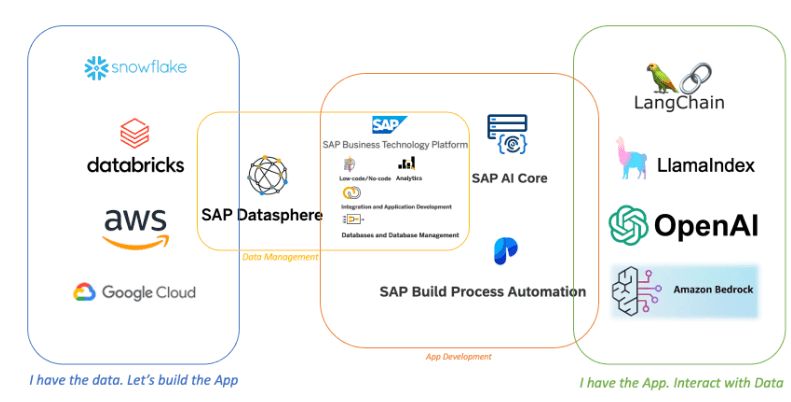
Source: SAP
Furthermore, SAP has announced that it will take another step forward. At theSAP Data Unleashedevent, the SAP Datasphere Knowledge Graphs were presented. In the graphic below, you can see the Graph Builder, which represents the linked metadata across multiple levels. It also shows how the data is used.
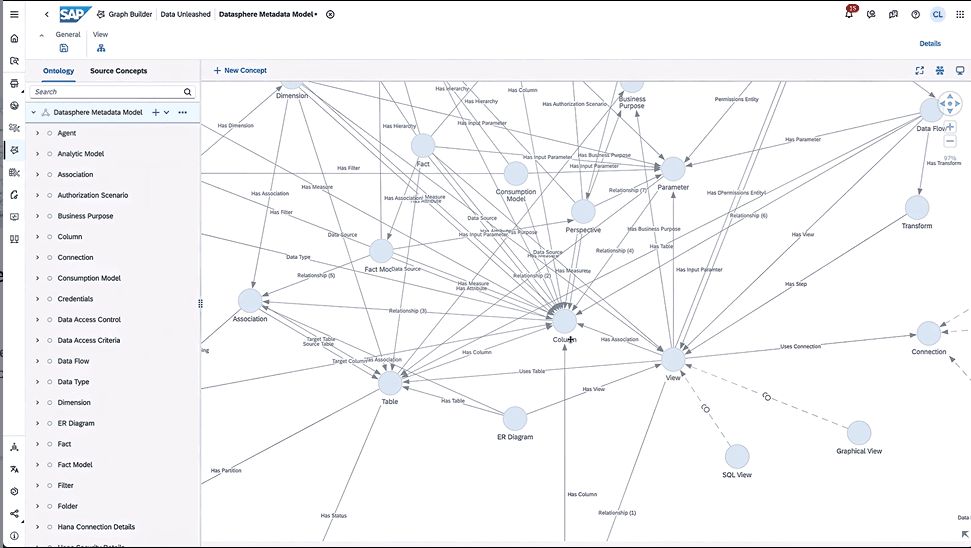
Source: SAP
SAP's vision is to use Joule to ask questions about a data model; Joule then accesses the model and the data and provides the answer.
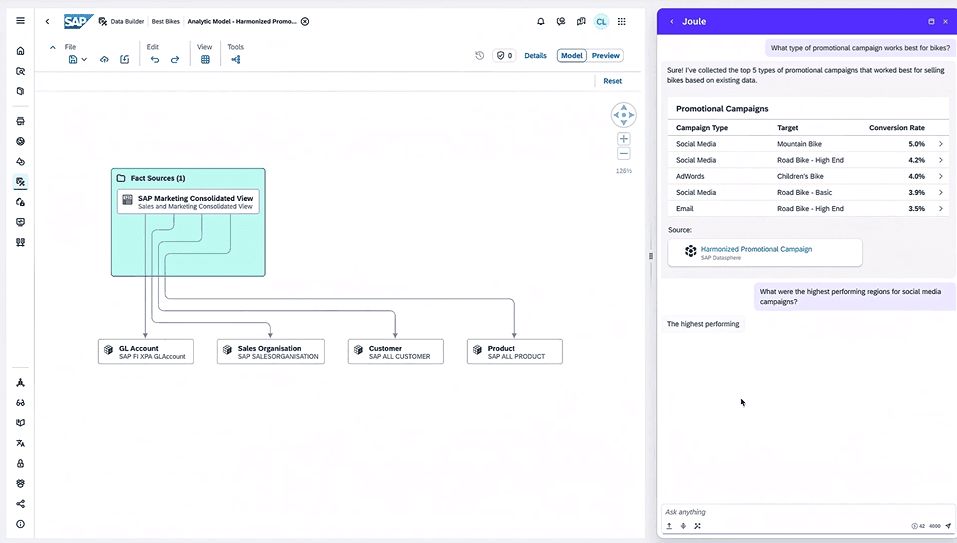
Source: SAP
This will reveal hidden insights and connections across applications and system boundaries. The target audience is business users (not just 'tech enthusiasts') to understand the relationships between their data, metadata, and processes. And last but not least: Machine Learning and Large Language Models can build on this to become even more effective.
What will this look like in practice? Well, currently the Knowledge Graphs do not yet appear in the Datasphere roadmap. However, knowing SAP, there is intense development happening behind the scenes. Because AI has come to stay.


