
SAP Cloud ALM & SMEs: How well can the tool manage projects?


Those familiar with SAP know the classic project steps: Discover, Prepare, Explore, etc. But how well does SAP Cloud ALM perform as a management tool in conjunction with the SAP Activate Roadmap?
To successfully implement projects, one relies on proven methods. For SAP, this is the SAP Activate Roadmap. It forms the methodological backbone of every project and automatically fills the project structure with the established SAP implementation methodology, consisting of phases, quality gates, deliverables, tasks, and roles.
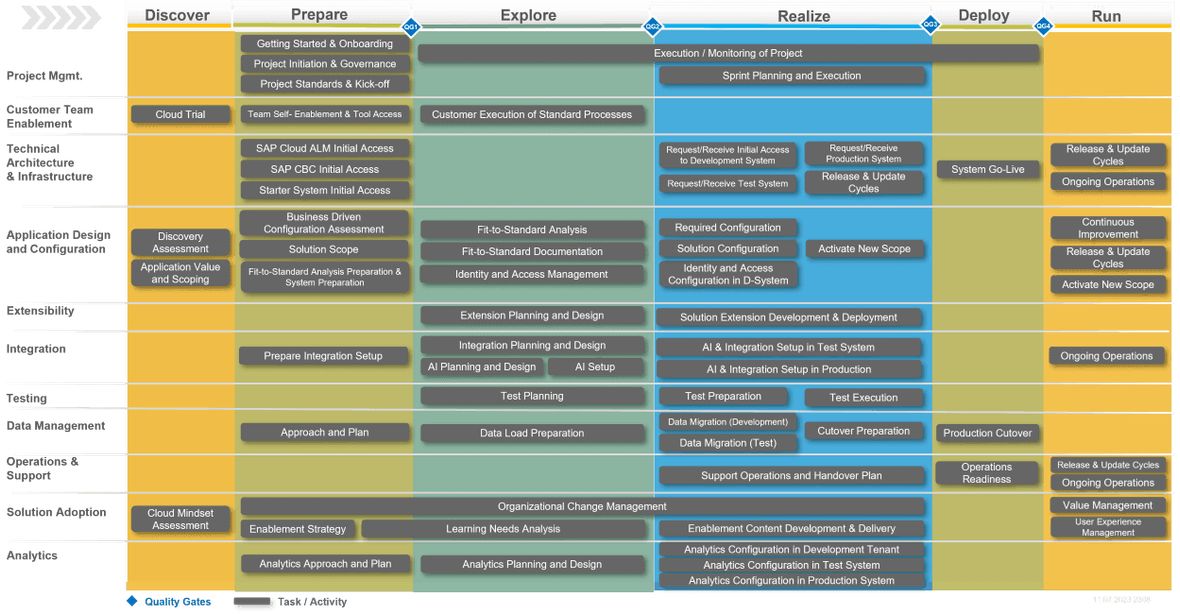
SAP Activate for SAP Cloud ERP Roadmap, as of 11/2025, source: SAP
Thus, every project is based from the outset on a standardised, practical foundation – a significant advantage that SRB leverages in all projects to ensure structure, transparency, and quality.
But what about SAP Cloud ALM? If the tool, as inPart 2 of our blog seriesalready presented, supports the entire lifecycle of SAP cloud applications, a central question arises: How do SAP Activate and SAP Cloud ALM work together? Where does it fit and where does it struggle? And what is needed?
We want to address these questions and examine the possibilities of SAP Cloud ALM in managing end-to-end processes.
Everything in line
In SAP Cloud ALM, 'requirement-driven implementation' is at the heart of every cloud transformation. This means: Every activity – from design to development, testing, and deployment to go-live – is directly derived from a documented requirement.
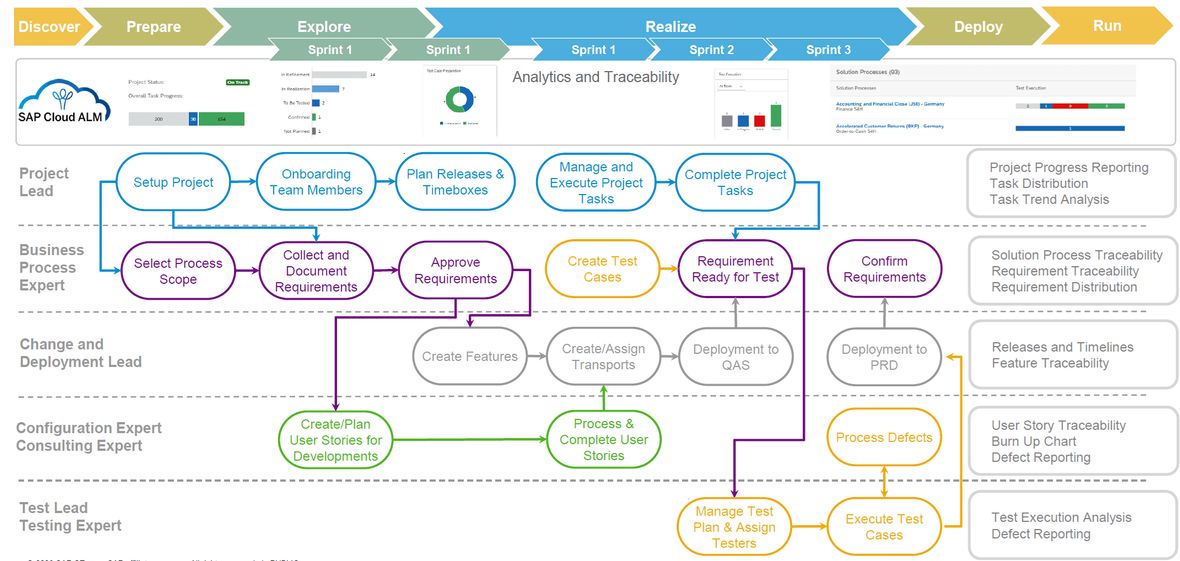
Figure 3: Requirement driven implementation (© 2023 SAP SE or an SAP affiliate company. All rights reserved.
This creates a seamless, traceable process in which the key roles interconnect:
- In the first step, the project scope is agreed upon. This usually happens in the early discovery phase. SAP provides the Digital Discovery Assessments (DDA) to determine the functional scope and the suitable cloud solution.
- From this, best practices and the SAP Activate Roadmap are derived. Both are incorporated into the project in SAP Cloud ALM and form the backbone of the further approach.
- During the fit-to-standard workshops, business process experts from the clients work together with consultants from the SRB team to review the best practice processes. Necessary deviations are documented as requirements.
- The client's process owner confirms the developed requirements. Best practice processes and requirements together form the project scope for the implementation of the solution.
- The project team now develops user stories and features for implementation.
- Project management and solution architects break down the implementation into implementation packages (e.g., sprints, increments).
- Consultants and developers implement the user stories.
- Testers check the requirements for compliance.
- Only after approval does the deployment to production take place.
The entire process is transparently documented in SAP Cloud ALM – the foundation of a structured, secure, and measurable SAP implementation in SMEs.
Why governance is important
Successful projects require clarity. Especially clarity about who does what when, and who decides. The best processes or tools are of no use if organisational coordination and transparency are lacking. Only a clear separation of roles ensures traceability and quality throughout the project.
Therefore, it should be explicitly emphasised here: What is needed is a clear governance model in SAP Cloud ALM. We therefore recommend reviewing the established definition of roles and responsibilities according to SAP Activate and expanding the core team to include
- Business Architect: Central contact for the smooth interconnection of the end-to-end processes to be mapped
- Technical Architect: Central contact for WRICEF and the technical architecture of the solution
On the way to the solution with SAP Cloud ALM as the central source of truth
With this setup, SMEs can embark on the journey to SAP Cloud ALM as the central source of truth for their SAP projects. And this journey begins with best practices.
When setting up the project in SAP Cloud ALM, the project structure from SAP Activate is complemented by the appropriate best practice content. The basis for this is usually the Digital Discovery Assessment (DDA). From this, best practice processes are derived, which form the starting point for the professional project implementation, the project scope.
The project scope is created in fit-to-standard workshops and includes best practice processes and deviations that are documented as requirements in SAP Cloud ALM.
A well-structured, approved initial backlog creates a shared view among all project participants on goals, scope, and effort in the upcoming project phases. It forms the basis for professional project controlling in SAP Cloud ALM. We will address what this can look like in practice and what to consider in the next part of the series. Stay tuned.
SAP Cloud ALM - Insights and Background
In our blog series on 'SAP Cloud ALM & SMEs', we look at the SAP tool from different perspectives and explore why it is worthwhile for many SMEs to rely on it. Here is an overview of the past contributions:
