
Predictive Forecasting & Co.: How SAP S/4HANA Modernises Financial Planning

SAP S/4HANA is transforming the corporate world, including financial planning and reporting. For customers who have already transitioned or are in the process, one question inevitably arises: What new opportunities are there? Here’s a brief overview.
Financial planning and reporting are among the most important tasks of a company. The goal is to be clear about where one stands, what optimisation potentials and investment opportunities exist, and when liquidity shortages may arise. Accordingly, the process behind it is central and significant.
SAP Business Planning & Consolidation, or BPC, has been the go-to tool for years. However, with S/4HANA, SAP has ushered its platform into a new era – thus opening up new opportunities for financial planning and reporting.
Financial Planning – The Future (of Finance) Belongs to the Cloud
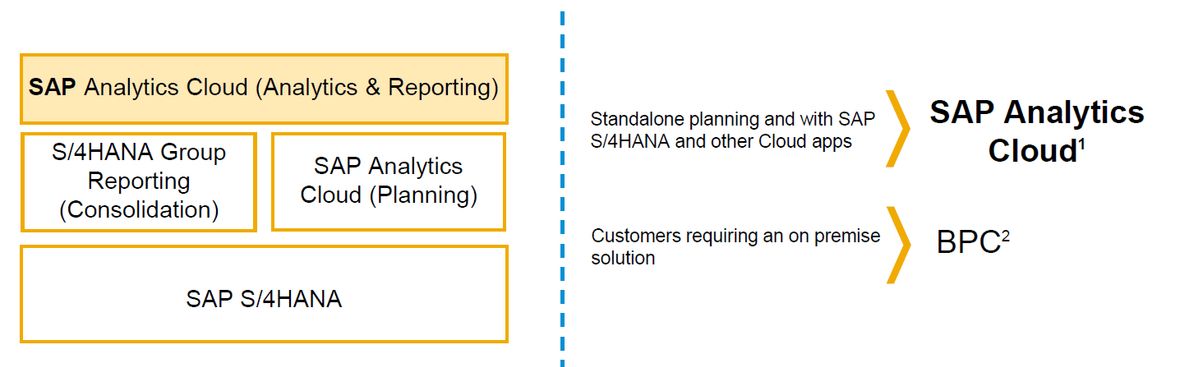
Those already working within the SAP S/4HANA environment can rely on both the proven on-premise solution BPC and the cloud solution SAP Analytics Cloud (SAC) for financial planning. The downside: Both solutions require separate licensing.
Source: SAP Financial Planning and Reporting in the Context of S/4HANA, Overview and Outlook (01/2023)
In BPC, planning occurs in the embedded SAP Business Warehouse (BW) directly within the SAP S/4HANA system. Data entry is done using BW queries in the Analysis for Office Excel plugin. The data can be stored in an info provider or directly in the ACDOCP table in the system. Planning logics are implemented using BPC planning functions. This has advantages: Master data and transactional data do not need to be loaded as in BW-BPC planning but are read live via HANA Calculation Views.
The future, however, belongs to SAC, as shown by SAP's strategy and current developments. Currently, a comprehensive content package is being delivered in SAC with layouts, functions, and interfaces for importing/exporting data to the S/4HANA system. In the coming months and years, we can look forward to many new features that will be continuously added to the existing planning portfolio.
One of the highlights in SAC is already the predictive functionalities like Predictive Forecasting, where future developments are derived from historical data, for example, predicting next year's revenues.
Data Integration in SAC – The 'Detour' Should Soon Be History
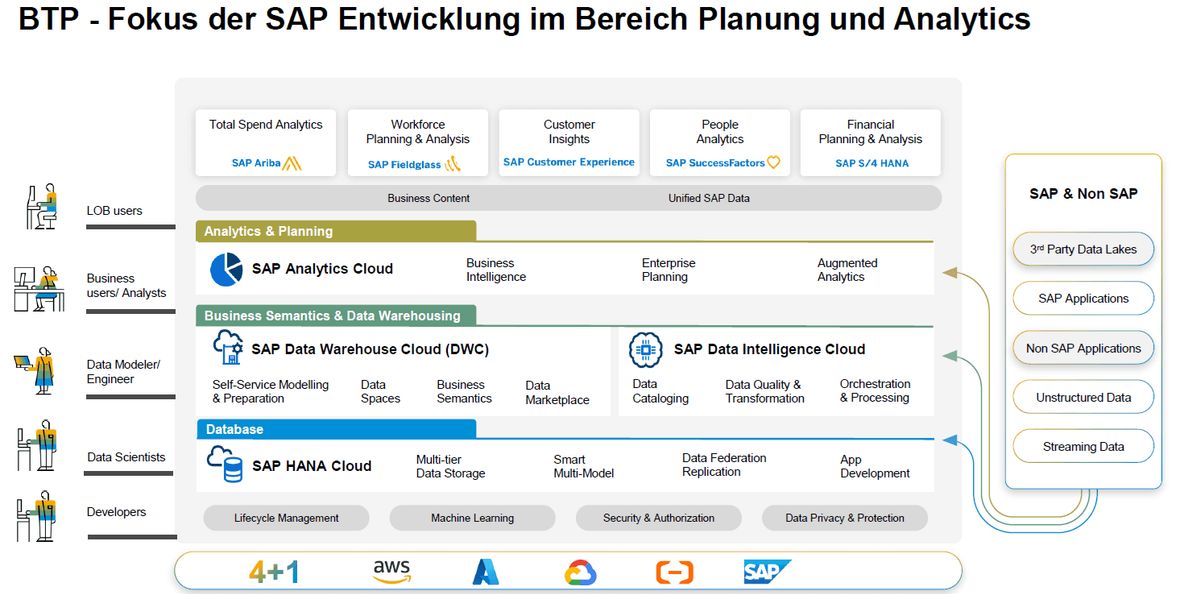
To plan in SAC, data must be held or replicated within SAC. Depending on need, this data can also be reloaded using data export functions. The SAP Business Technology Platform (BTP) plays a central role in connecting source systems to SAC.
Source: SAP Financial Planning and Reporting in the Context of S/4HANA, Overview and Outlook (01/2023)
Thus, those wishing to integrate data from SAP S/4HANA into SAC do so using CDS views/OData services. The catch: All essential master data, such as accounts and cost centres, as well as transactional data, are already delivered in standard form. Custom development is unnecessary.
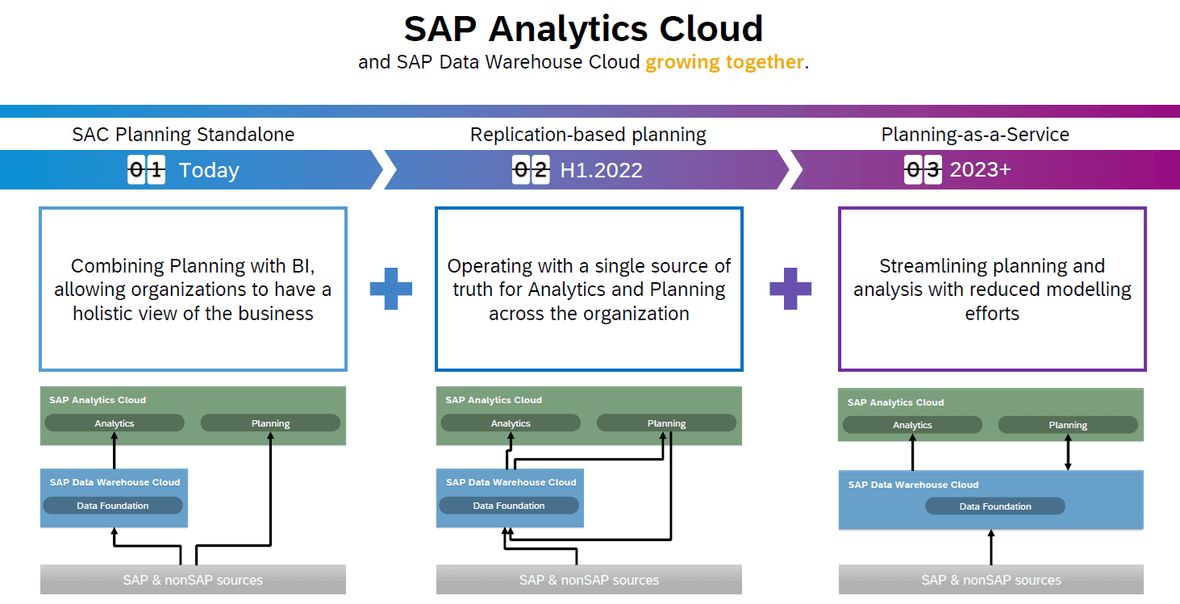
For those who find this cumbersome, relief should soon be available. SAP is working to enable future central data storage in the SAP Cloud Data Warehouse solution Datasphere, allowing direct access to the data with SAC.
Source: SAP Financial Planning and Reporting in the Context of S/4HANA, Overview and Outlook (01/2023)
We are eager to see when this optimised connection will be realised and will keep you updated.
BPC in SAC – Hybrid Planning as an Alternative
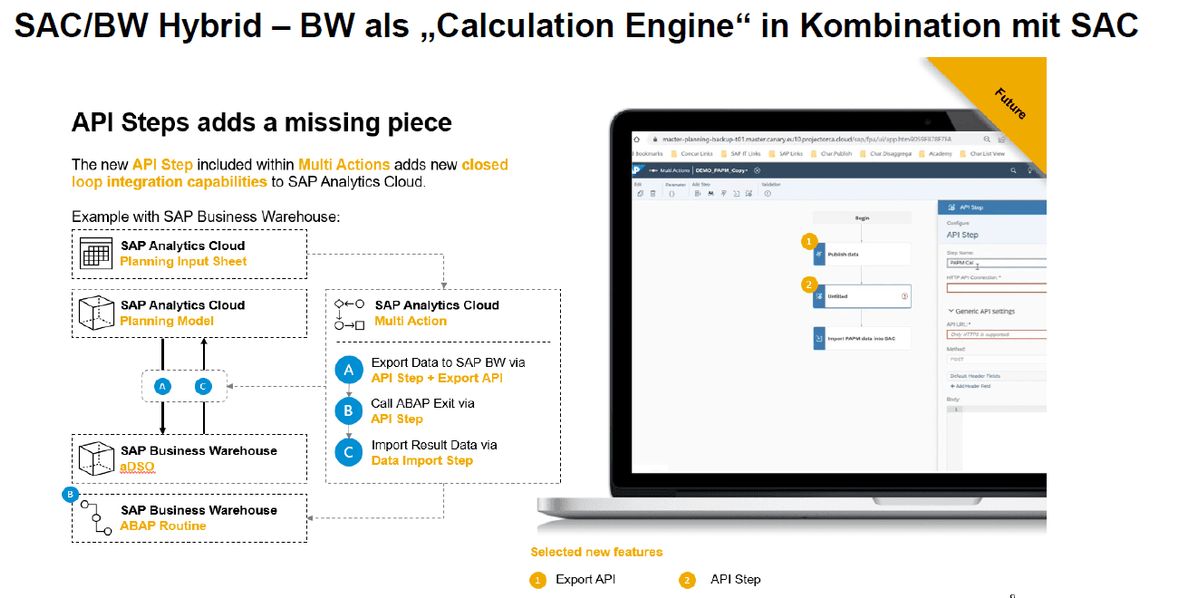
Even though the focus is certainly on SAC, there is also progress in integrating the on-premise planning solution BPC into SAC, known as hybrid planning. The approach: Planning logics such as data models, planning functions, and queries continue to be developed in BPC planning; however, the representation of planning layouts occurs in SAC.
This alternative variant is particularly interesting for existing BPC customers who wish to continue using existing, highly complex BPC planning logics while also enabling end users to benefit from the modern SAC planning environment.
There are also plans for further optimisation: In the future, it should be possible to execute import/export and ABAP exits directly in the SAP backend via multi-actions.
Source: SAP Financial Planning and Reporting in the Context of S/4HANA, Overview and Outlook (01/2023)
Financial Reporting – Insights in Real-Time
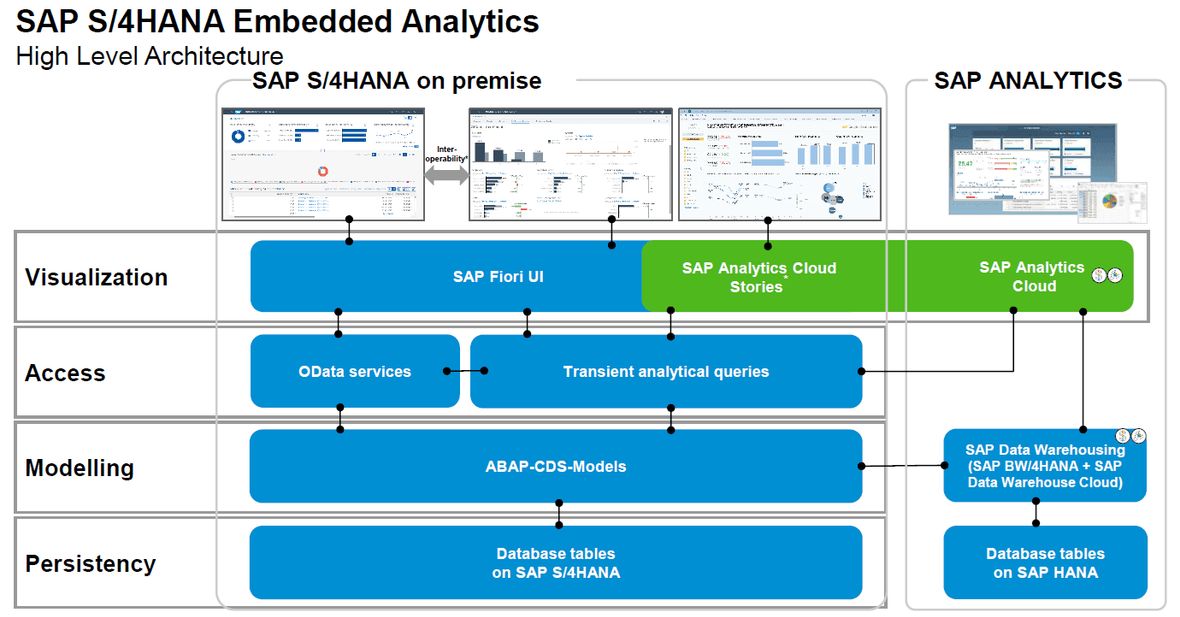
In addition to planning, there is also significant progress in reporting. With SAP S/4HANA Embedded Analytics, data can be evaluated in real-time using analytical CDS view reports with SAP Fiori apps. These CDS views are provided in so-called Virtual Data Models (VDM) through annotations for the analytical Fiori apps.
Source: SAP Financial Planning and Reporting in the Context of S/4HANA, Overview and Outlook (01/2023)
There is, on one hand, the option to use the extensive standard reports that are already available. Through theSAP Fiori Apps Reference Librarythe apps already available in standard can be analysed.
Additionally, custom CDS views can be created via ABAP Eclipse and displayed with custom analytical apps in Fiori. For example, it is possible to save these evaluations as a custom Fiori tile in the system with just a few mouse clicks using the query browser app.
Besides Fiori, data can also be evaluated in SAC via live connection. As mentioned above regarding financial planning, there is no data storage, only visual preparation in SAC, where a dedicated SAC embedded solution is integrated into SAP S/4HANA Cloud systems.
Financial Planning and Reporting in HANA – Learn More at the BI Brunch
If you want to know more about how you can optimise your financial planning and reporting in SAP S/4HANA, just get in touch with me. Or you can join our7th BI Brunch on 28 September 2023. I would be pleased to see you there. You can already register by email atinfo@srb.at.


